Everything a homeowner, business owner, or property manager should know before choosing a rooftop solar system — from working and system types to roof checks, installation, savings, and maintenance.
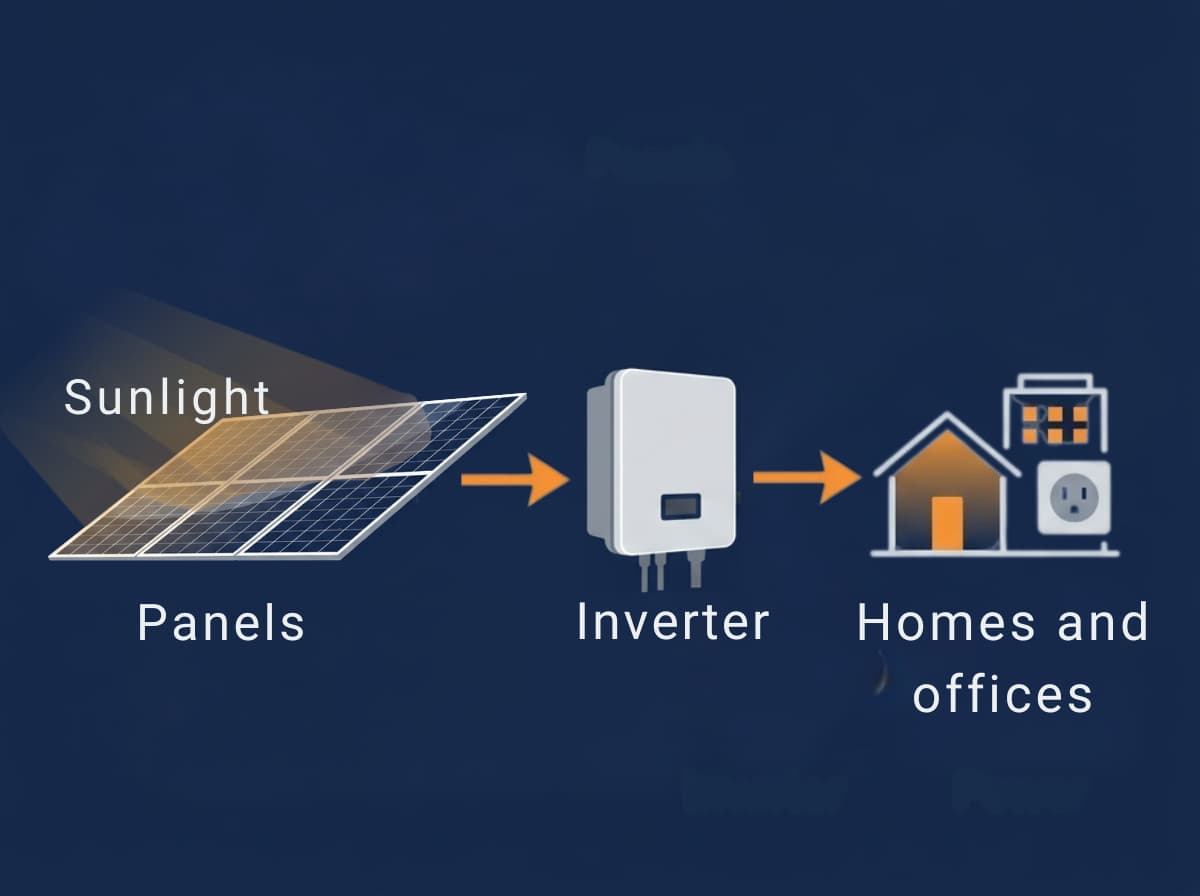
Rooftop solar uses photovoltaic panels installed on your own roof to convert sunlight into electricity. That electricity is then converted into usable AC power by an inverter and supplied to your home or business load.
When sunlight falls on the panels, they generate direct current electricity.
The inverter converts the generated power into the electricity your building can actually use.
The electricity is either used instantly, stored in batteries, or sent to the grid depending on the system type.
You can monitor generation, health, alerts, and estimated savings over time.
The right solution depends on whether your property has reliable grid power, whether outages are common, and whether you need battery backup.
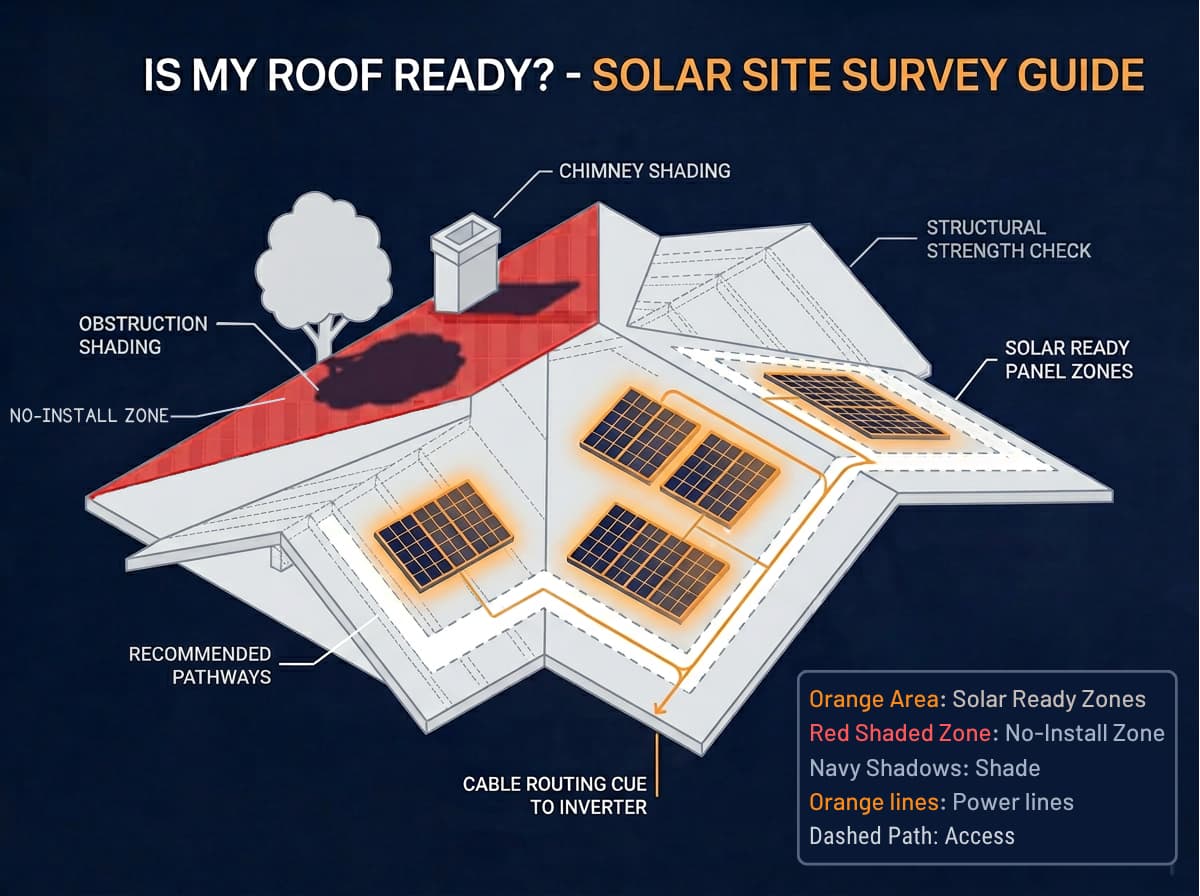
Before recommending a system, installers usually check shadow-free area, structural condition, roof type, access for work, and obstructions such as tanks, trees, or nearby buildings.
Enough usable, shadow-free area for the required system size.
Roof type such as RCC, metal sheet, or tile and whether mounting is feasible.
Minimal shading during key sunlight hours.
Safe pathway for installation, service, and periodic cleaning.
Practical routing for cables, inverter location, and electrical integration.
Capture sunlight and generate DC electricity.
Converts panel output into AC electricity and manages system performance.
Secures the panels safely to the roof while maintaining tilt and spacing.
Includes protections, meters, and monitoring systems for safe and visible operation.
Roof assessment, shadow review, load discussion, and basic feasibility check.
Recommended size, expected savings, equipment selection, and quotation.
Mounting structure, panels, inverter, wiring, and electrical integration.
Commissioning, monitoring setup, customer briefing, and system handover.
Solar output and savings are influenced by sunlight availability, shading, tariff, system quality, load profile, and regular upkeep such as cleaning and inspection.
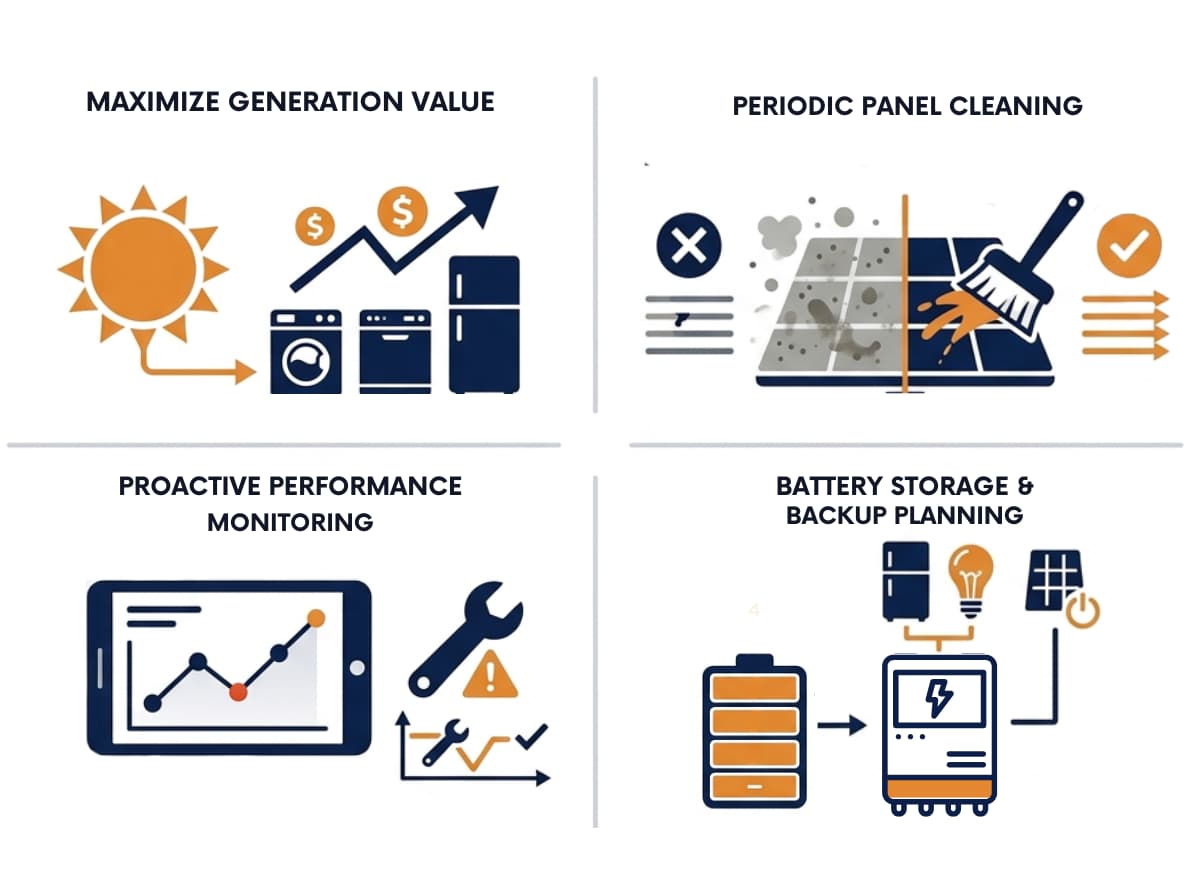
More daytime use usually improves the value of solar generation.
Dust and dirt can reduce output if panels are not cleaned periodically.
Monitoring helps identify faults or underperformance early.
Battery-based systems need proper storage sizing and backup planning.
Yes, but generation will be lower than on clear sunny days.
No. On-grid systems generally do not require a battery, while hybrid and off-grid systems do.
That depends on your load, available roof area, system size, and whether backup storage is included.
The best way is to compare your bill, grid condition, critical loads, roof space, and budget before deciding.
Once you know the basics, the next step is simple: estimate your savings or talk to Praflux for a site-specific solution.
Whether you are exploring or ready to install, start here.
Need help deciding? Start with a Praflux site survey and recommendation.